Understanding Textual Implications
Not sure you’re ready?
Take the ~3-minute readiness diagnostic and see where you stand.
When a third-grade student writes, "The clouds turned dark and heavy, and soon we heard a loud rumble," they do not need to explicitly write the word thunderstorm for you to know what is happening. The text hands you the atmospheric pressure and the acoustic result; your mind effortlessly supplies the storm. This cognitive leap—the derivation of an unstated truth from explicit premises—is the bedrock of reading comprehension. As a future educator, you will perform this exact mental operation daily. You will parse state standards, interpret administrative policies, and read between the lines of student assessments to determine not just what is said, but what those words logically entail.
To prove your readiness for the classroom, the Praxis (5713): Core Reading exam tests this exact skill with rigorous precision. By understanding the mechanical rules that govern textual implications, you can strip away the ambiguity of selected-response questions and treat reading comprehension as a hard science.
Before we dissect the logic of implications, we must understand the environment in which you are operating. The Praxis Core Reading 5713 exam allows 85 minutes to complete a total of 56 selected-response questions. This requires a brisk, methodical pace.
Within this landscape, the Key Ideas and Details category comprises approximately 35 percent of the Praxis Core Reading 5713 exam. Because this specific Key Ideas and Details section contains between 17 and 22 questions, mastering how to extract both explicit and implicit meaning is arguably the highest-yield investment you can make in your exam preparation.
Implication questions frequently use phrasing such as "the passage suggests," "the author implies," or "it can be inferred." When you see these trigger phrases, you are being asked to pivot from merely retrieving facts to connecting them.
What exactly is an implication? At its core, an implication question requires test-takers to draw a conclusion that is strongly suggested without being explicitly stated in the reading passage.
To determine broader implications, a reader must evaluate the natural consequences of accepting the author's claims as true. Textual implications reveal the broader consequences of an author's argument. If the author establishes that Process A destroys Habitat B, a valid implication might address the unstated, yet logically undeniable, decline of the species living within Habitat B.
However, there is a strict boundary separating a true implication from a mere reading comprehension detail:
Answer choices that merely restate a sentence directly from the passage are not true implications.
True implications must represent an unstated consequence or conclusion derived from the text. If the answer choice is explicitly written in paragraph two, it is a factual recall answer, not an implication.
The Closed Universe Principle
The most common trap intelligent, well-read educators fall into on the Praxis exam is bringing their own expertise into the testing room.
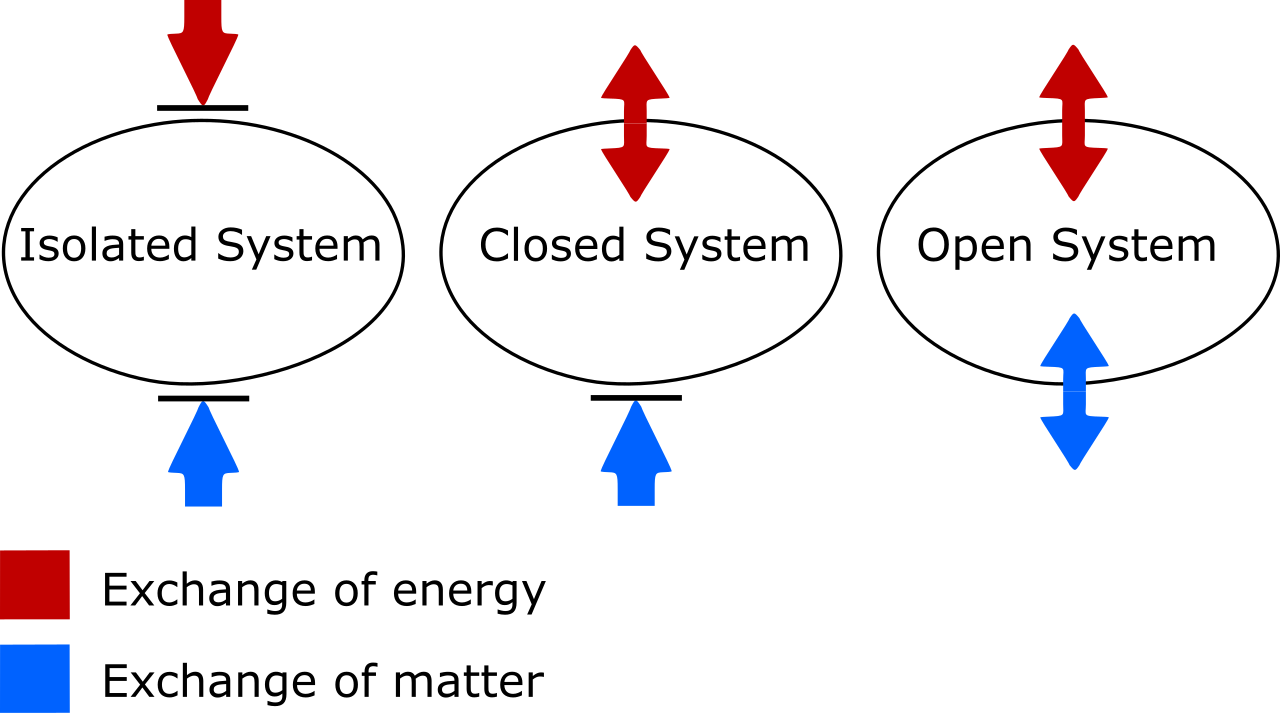
A valid textual implication must logically follow solely from the information provided within the reading passage. You must treat the passage as a sealed vacuum—a closed universe where only the author's provided facts exist. Consequently, test-takers must actively ignore any outside knowledge about a topic when selecting an implication answer on the Praxis exam.
Consider this carefully: an answer choice presenting a universally true real-world fact is incorrect if the reading passage lacks direct supporting evidence. If the passage is about the history of the Apollo 11 mission, and an answer choice states that "Mars is the fourth planet from the sun," you must reject it—even though it is astronomically true—if the author never provided evidence regarding Mars.

Furthermore, this closed universe operates on the author's logic, not yours. A valid implication remains logically true even if the reader personally disagrees with the author's stated viewpoint. You are not evaluating whether the author is right; you are evaluating what must logically be true if the author's premises are right. Because you are bound by the author's parameters, a valid textual implication cannot directly contradict any explicit statement made within the reading passage.
How do we actually find the implication? We trace the circuitry of the author's argument. Readers can discover textual implications by identifying the unstated assumptions that logically connect the author's premises to the author's conclusions.
Deducing an implication often requires connecting two or more explicit premises found in different parts of the text.
- Premise 1 (Paragraph 1): Only students with signed permission slips may enter the laboratory.
- Premise 2 (Paragraph 3): Marcus is currently conducting an experiment inside the laboratory.
- Logical Implication: Marcus submitted a signed permission slip.
To do this reliably, test-takers should trace logical implications step-by-step from the exact wording of the passage. Do not leap to the finish line; walk the path.
A correct implication must be one hundred percent logically sound based strictly on the premises established by the author. Because of this requirement for absolute logical certainty, extrapolating beyond the immediate logical next step of a passage's argument often leads to incorrect implication answer choices. If you have to say to yourself, "Well, if X happens, then maybe Y will happen, which could eventually lead to Z," you have extrapolated too far. The correct answer is Y, the immediate consequence.
Managing Scope and Generalizations
The precision of your deduction relies entirely on its scope. The scope of a correct implication must precisely match the scope of the evidence provided in the reading passage.
If the passage discusses the dietary habits of the North American brown bear, an implication about the dietary habits of all bears globally is fundamentally flawed. An implication answer choice is incorrect if the choice's scope is significantly broader than the specific topic discussed in the passage. For this reason, broad generalizations are usually incorrect implication choices because generalizations extend beyond the specific evidence provided in the text.
Cause-and-Effect Relationships
Authors frequently build arguments using causal chains. If a passage establishes a strict cause-and-effect relationship, a valid implication must maintain the exact directional order of that relationship.
If the text states that high anxiety causes poor test performance, you cannot logically infer that poor test performance causes high anxiety. Reversing the direction of a cause-and-effect relationship is a common trap in textual implication questions. Remember: wet streets do not cause the rain.
When you are down to two possible answer choices, the exact vocabulary used in the answer choices provides a massive statistical clue regarding its validity.
| Linguistic Feature | Praxis Implication Strategy |
|---|---|
| Extreme Modifiers | Answer choices containing extreme modifiers like "always," "never," or "impossible" are typically incorrect in implication questions. Such absolute certainty rarely aligns perfectly with nuanced text. |
| Moderate Language | Moderate language such as "sometimes," "may," or "often" frequently indicates a logically sound implication choice. These words create a flexible scope that is much easier for the text's premises to fully support. |
| Emotional Rhetoric | Emotional language in an answer choice usually disqualifies that choice as a valid implication. |
| Justified Emotion | Emotional answer choices are only valid implications if the author explicitly uses strong emotional rhetoric in the original text. |
Be highly skeptical of answer choices that sound angry, overly enthusiastic, or aggressively critical unless the author's original tone matches that exact level of intensity.
As you navigate the 56 questions on the Praxis Core Reading, you will encounter structural variations that require you to apply your deductive skills in unique ways.
Paired Passages: Often, you will be presented with two shorter texts regarding the same topic. Textual implication questions on paired passages often require combining facts from both texts to draw a new conclusion. Passage A might provide the rule, while Passage B provides the scenario.
Hypothetical Scenarios: Some implication questions require test-takers to apply a rule established in the text to a new, hypothetical situation. Think of this like teaching a mathematical formula to a student; if they understand the rule, they can plug in new numbers. If the text outlines the criteria a school uses to allocate funding, the question may present a fictional school district and ask you to infer whether it would receive funding based on those rules.
The Conflation Trap: Finally, beware of the cognitive illusions test-makers build into the exam. Answer choices that mix up or conflate distinct details from the passage are a common trap in implication questions. The test writers will take a noun from paragraph one and a verb from paragraph three, mashing them together into an answer choice that sounds familiar because you recognize the words. Tracing your logic step-by-step from the exact wording prevents you from falling for this illusion.
By viewing reading comprehension not as an art, but as an exercise in structural logic, you equip yourself with the exact analytical tools you will use to evaluate curriculum, assess student progress, and master the Praxis exam. Stay inside the closed universe, mind your scope, and follow the premises to their undeniable conclusions.