Identifying Relationships Among Ideas
Not sure you’re ready?
Take the ~3-minute readiness diagnostic and see where you stand.
When you pry the back off a mechanical watch, you do not see a random assortment of brass pieces scattered in a void. You see an intricate network of interlocking gears, where the rotation of one wheel inherently governs the speed and direction of the next. A reading passage operates by the exact same physical law. Sentences and paragraphs are not merely stacked upon one another like bricks; they are mechanically linked. Grasping a text fundamentally means recognizing these invisible linkages. To read at an elite level—and to eventually teach others to do the same—you must shift your attention away from what the author is merely stating and focus intensely on what the author's ideas are doing to one another.
As a future educator, you are well aware that knowledge is rarely absorbed in isolated fragments. When you build a lesson plan, you scaffold it. You introduce a premise, provide an example, raise a potential objection, and then offer a resolution. Authors construct written passages exactly the same way.
The Praxis Core Reading exam tests your ability to trace the connections and dependencies between concepts in a text. You are not just reading to memorize facts; you are reading to reverse-engineer the author’s thought process. You must learn to identify how different ideas presented in a reading selection relate to one another, distinguishing between the core machinery of the argument and the decorative paint on the surface.
The most obvious way an author directs your attention is through the mechanical joints of the text. Authors use transitional words to establish explicit logical connections between separate sentences. These are the signposts that tell you exactly how the gears are turning.
Understanding these explicit connections is critical. Below are the primary text structures you will encounter, alongside the specific signal words that activate them:
| Logical Relationship | Structural Function | Explicit Signal Words |
|---|---|---|
| Cause-and-Effect | Cause-and-effect relationships in a text explain why a specific event occurred. One gear turns, forcing the next gear to spin. | because, therefore, consequently |
| Chronological | Chronological text structures sequence historical or narrative events in the exact time order the events occurred. | first, subsequently, finally |
| Comparison | Comparison text structures highlight specific similarities between multiple subjects within a passage. | similarly, likewise |
| Contrast | Contrast text structures highlight specific differences between multiple subjects within a passage. | however, conversely, unlike |
| Refutation | An author pushes back against an opposing view or mitigates a conflicting piece of evidence. | despite, regardless, nevertheless |
Warning for the Test-Taker: Do not just gloss over these words. On the Praxis, if you see the word consequently, the text immediately preceding it is the cause, and the text immediately following it is the effect. The relationship is locked into the syntax.
Zooming out from individual sentences, we find that entire passages are built around broad structural frameworks. Recognizing these frameworks early allows you to anticipate where the text is heading.
Problem-and-Solution
Think about a standard school board meeting. First, someone presents a crisis (e.g., declining attendance), and then a committee proposes a new policy. Texts operate the same way. Problem-and-solution relationships introduce an academic or social issue alongside a specific method for resolving the issue. The entire passage is held together by this tension and release.
Sequential Relationships
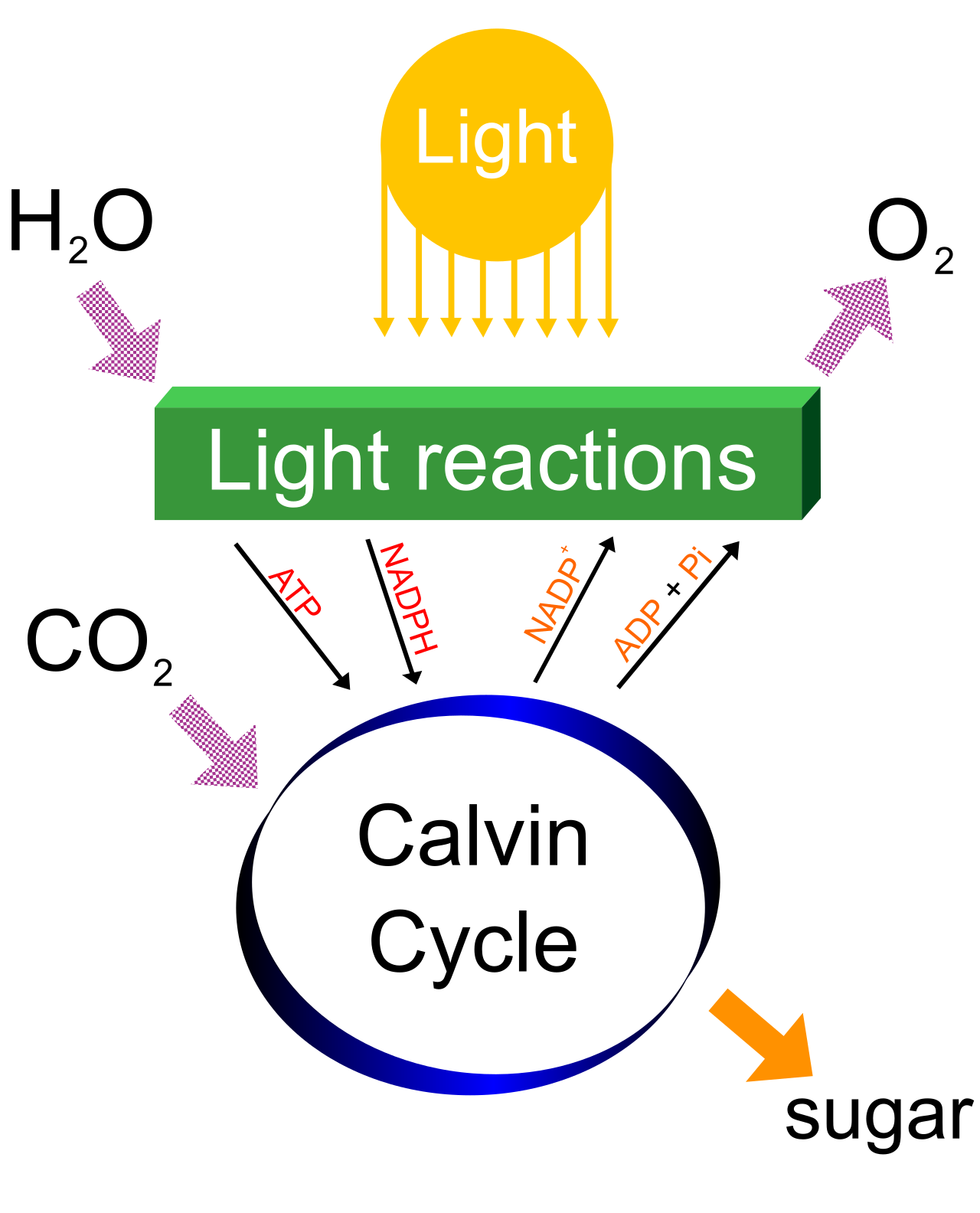
Do not confuse this with chronological order. Chronology is for history and narrative. Sequential relationships explain the explicit step-by-step process required to complete a specific task. If a text is explaining how photosynthesis works, or how a bill becomes a law, it is establishing a sequential relationship.
Hierarchical Relationships
Sometimes an author isn't moving through time or solving a problem, but rather organizing information by weight. Hierarchical relationships rank informational concepts from most important to least important (or vice versa). You see this daily in education: a curriculum guide might place a primary, overarching standard at the top, followed by secondary sub-skills.
Let’s look at the actual architecture of the page. Why do authors hit the "Enter" key? Paragraph breaks frequently signal a deliberate shift in a logical relationship between passage ideas. A paragraph break is the clutch in our conceptual engine; it disengages one gear to engage another.
This is a highly testable concept. In fact, Praxis Core Reading questions frequently require test-takers to identify the logical function of a specific paragraph within a larger passage.
When evaluating a paragraph's function, ask yourself: What work is this paragraph doing for the overall argument?
- Providing Evidence: The paragraph might offer supporting textual evidence, which provides specific examples to validate a broader authorial claim.
- Adding Detail: Authors use textual elaboration to provide additional clarifying details for a previously introduced core concept.
- Opposing the Claim: A specific paragraph might function to provide a formal counterargument to a previously stated claim. It stands as a roadblock the author must navigate around.
Beyond basic organization, authors employ specific rhetorical maneuvers to manipulate how the reader perceives the relationship between ideas.
For instance, an author might open a passage by summarizing a widely held belief about human psychology. Do they agree with it? Not necessarily. Often, an author may introduce a common societal misconception strictly to systematically refute the misconception later in the text. You will know the refutation is coming when you hit the signal words indicating authorial refutation: despite, regardless, and nevertheless.
Another common maneuver is the use of inquiry to build structure. An author might pose a rhetorical question to establish a specific investigative framework for the subsequent paragraphs. By asking, "But how does the brain actually process this trauma?", the author dictates that the remainder of the text will systematically answer that exact question.
Tracing the Scope
As you read, pay attention to the altitude of the text. Tracing idea relationships includes recognizing an author's rhetorical shift from a broad general theory to a specific real-world application. An essay on macroeconomics (broad theory) suddenly shifts to discussing the price of milk at a local grocery store (real-world application). Recognizing this shift prevents you from misinterpreting the specific example as the main idea itself.
Analogical Thinking
When a concept is highly abstract, brilliant communicators (and excellent teachers) build bridges to the familiar. Textual analogies establish a conceptual relationship based on structural similarities between two fundamentally different subjects. If a passage compares the human immune system to a medieval castle under siege, the author is using the physical structure of the castle to explain the biological structure of the body. The subjects are fundamentally different, but the relationship between their internal components is identical.

Everything we have discussed so far has been largely explicit—signaled by clear transitions, structural maneuvers, and paragraph breaks. But what happens when the author removes the training wheels?
Implicit logical relationships require a reader to infer conceptual connections without explicit transitional signal words. The author does not say "therefore" or "however." They simply place two ideas next to each other, expecting the friction between them to spark the connection in your mind.
To master implicit relationships: Identifying an implicit relationship requires a reader to synthesize details from multiple distinct parts of a text. You cannot simply stare at a single sentence. You must hold an idea from paragraph one in your mind while you read paragraph four, and mentally fuse them together.
Furthermore, you must be hyper-aware of conceptual dependencies. These occur when understanding a secondary text idea requires comprehending a preceding foundational text idea.
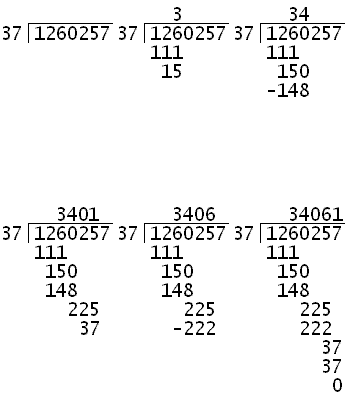
Think of this in the context of your future classroom. You cannot teach a child long division if they have not yet grasped basic subtraction. The latter is conceptually dependent on the former. In a reading passage, an author cannot explain the implications of a new legal ruling (the secondary idea) without first explaining the constitutional precedent (the foundational idea). If a Praxis question asks you why an author includes a specific historical detail, the answer is often that the subsequent argument is conceptually dependent upon it.
When you sit down to take the Praxis Core Reading exam, remember that you are evaluating a constructed machine. Look for the cause-and-effect gears, the chronological chains, and the conceptual dependencies that hold the entire structure together. Identify the rhetorical shifts and the implicit relationships demanding your synthesis.
By analyzing passages as interconnected systems of thought rather than linear strings of words, you not only prepare yourself to conquer the Praxis, but you also equip yourself with the exact analytical lens you will soon use to teach your own students how to read the world.