Understanding the Role of Specific Ideas and Information
Not sure you’re ready?
Take the ~3-minute readiness diagnostic and see where you stand.
When you eventually stand at the front of a classroom, every instructional move you make will have a specific, intended function. You might drop a sudden, heavy silence into a chaotic room to signal a transition, hand a physical block to a struggling student to clarify fractions, or tell a brief story about your own mistakes to humanize failure. A well-constructed piece of writing operates with the exact same deliberate architecture. An author does not randomly throw statistics, anecdotes, and quotes onto a page; each element is a calculated tool deployed to move the reader's mind in a specific direction. Understanding reading comprehension at an advanced, professional level means shifting your gaze from what the author is saying to why the author is saying it. To master this, you must learn to look at a paragraph not as a static block of text, but as a working mechanism where every gear, lever, and spring performs a highly specific job.
The Praxis Core Reading exam requires test-takers to identify the function of specific sentences within a passage. The test-makers are evaluating whether you can reverse-engineer a text to see how the author built it. To assess this structural awareness, Praxis Core exam questions about the role of a detail often use the phrase "serves primarily to," or they will frame the prompt so it asks how a detail "functions as."
When you see these phrases, you must immediately stop reading for mere content and start reading for structural purpose.
The Golden Rule of Function: Evaluating a detail's role requires identifying the main idea of the surrounding paragraph. A detail never exists in a vacuum. It is a servant to the paragraph's central claim. If the paragraph argues that school funding relies on an unstable tax base, a mention of a $2.4 million budget deficit isn't there just to throw math at you—it is there to prove the instability.
To execute this on the exam, you need a reliable mechanical strategy. Always look to the immediate neighborhood of the detail in question. Re-reading the sentence immediately preceding a specific detail helps determine the purpose of the specific detail. Often, the previous sentence makes a broad claim, and the detail in question arrives to provide the concrete proof.
As an educator, you will use different pedagogical tools for different cognitive tasks. Authors do exactly the same thing. Let's explore the functional roles that different types of information play in a text.
1. Building the Foundation: Evidence and Clarification
At the most fundamental level, specific ideas in a text often serve as evidence to support a broader claim. An author builds a theoretical house and then uses facts as the nails to hold it together.
Often, these facts take the form of illustrations. Details in a reading passage can provide an illustrative example of a general concept. Think about teaching abstract concepts to seventh graders; if you talk about "kinetic energy," you immediately follow it up by talking about a roller coaster plunging down a hill. Authors do this too, and they leave signposts. Words like "for example" explicitly signal that a specific detail functions as an illustration.
Sometimes, the foundational work is purely explanatory:
- Defining the Unknown: If an author uses specialized jargon, a specific detail might serve to define an unfamiliar term, ensuring the reader isn't left behind.
- Building Bridges with Metaphor: When a concept is overwhelmingly abstract, specific ideas can serve as an analogy to clarify a confusing topic. Just as we compared reading passages to the mechanics of a classroom, authors map the unfamiliar onto the familiar to generate understanding.
2. Adding Weight, Credibility, and Scope
Once a claim is established, an author must convince the reader that the claim matters and that the author is trustworthy.
If a passage discusses a widespread crisis, such as chronic absenteeism, the author will need to show the reader exactly how bad the fire is. Here, authors use statistical data to quantify the magnitude of a problem. Alternatively, a piece of information may be included to demonstrate the severity of a previously mentioned issue. (e.g., stating that district drop-out rates have tripled).
To prove they aren't just making things up, authors reach for authority.
- Empirical Weight: An author might include a specific scientific study to provide empirical validation for a theory.
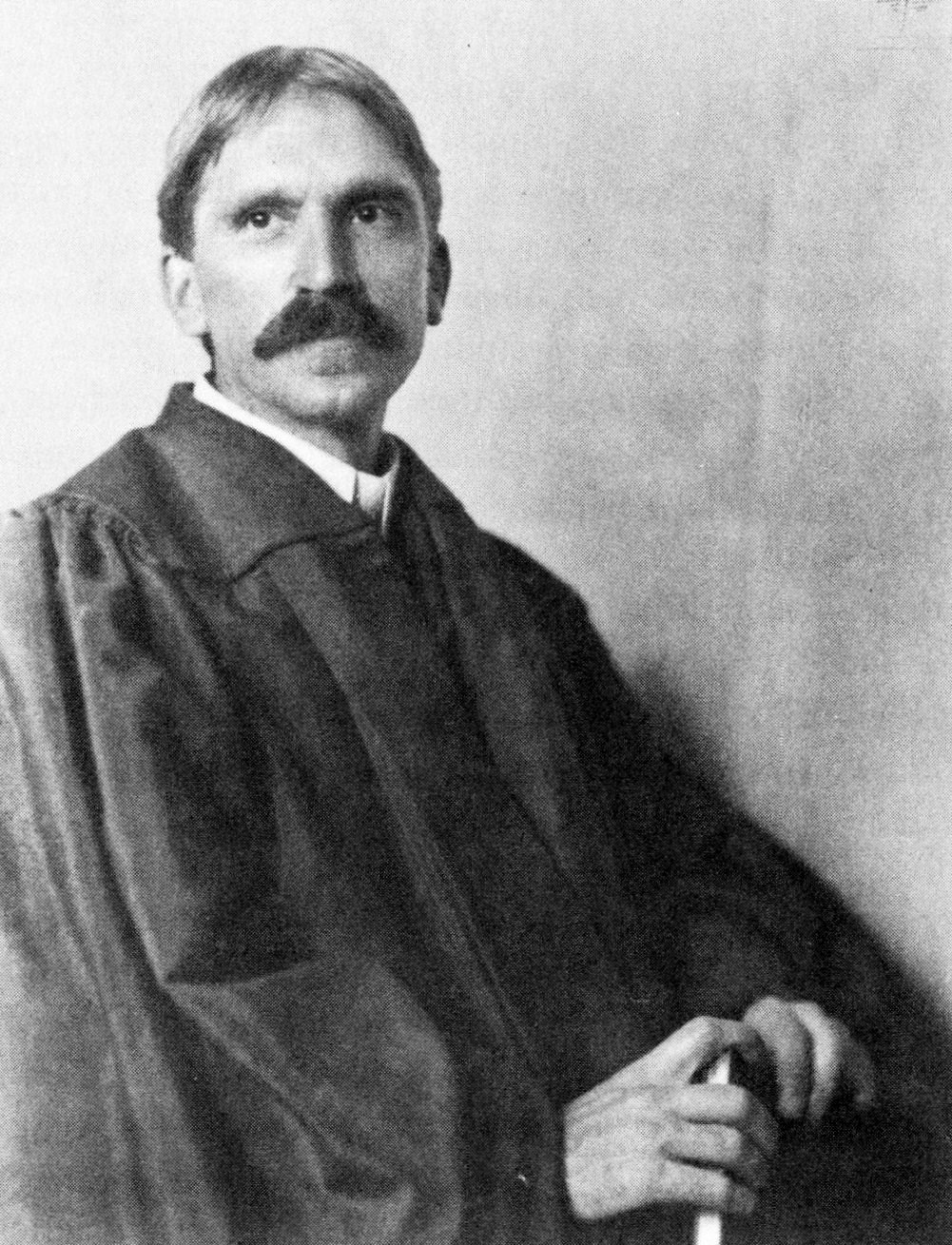
- Expert Testimony: Similarly, quotes from experts are used to lend credibility to an author's argument. If an author wants to argue about pedagogical best practices, quoting John Dewey or a modern neuroscientist signals to the reader, "Don't just take my word for it; listen to the pioneers."
3. Injecting Nuance: Contrast, Exception, and Complexity
Sophisticated writing thrives on tension. A one-sided argument is rarely persuasive. To craft a mature argument, an author must acknowledge the opposing side and the gray areas.
- The Pivot: Information in a passage might introduce a counterargument. You will often see this paired with transition words like however or conversely.
- Alternative Lenses: Details that contrast with earlier statements often introduce an alternative perspective, forcing the reader to view the issue from a new angle.
- Busting Myths: Sometimes the text goes on the offensive, where a specific reference might serve to challenge a commonly held belief.
But nuance isn't always about outright disagreement. Often, it is about precision. Authors include specific information to qualify a broad generalization. To qualify a claim means to set boundaries on it (e.g., "Standardized tests predict college success, but only for students from high-income brackets"). In this same vein, a specific detail might emphasize an exception to a general rule.
Occasionally, authors use details to untangle a knot they have deliberately tied in the text. By presenting two seemingly opposing facts, authors use specific examples to resolve an apparent contradiction presented earlier in the text, showing how both things can simultaneously be true.
4. Structural and Narrative Mechanics
Passages are vehicles that move a reader from Point A to Point B. Specific sentences act as the steering wheel and the transmission.
-
The Engine of Plot: While much of the Praxis Core focuses on informational texts, you will encounter literary or biographical passages. In these texts, information describing an action can function to advance the narrative of a literary passage. Action drives the plot forward.
-
The Transmission: In essays, information can act as a transition between two distinct ideas, smoothing the shift so the reader isn't jolted.
-
The Blueprint: Passages often deal with history and policy. A specific reference can establish the historical context of an event, rooting the argument in a specific time and place. Furthermore, a specific reference to a law or policy often functions to outline a regulatory framework, establishing the rules under which a system operates.
-
The Mechanics of Reality: To explain why something happens, specific facts within a text can highlight a cause-and-effect relationship.
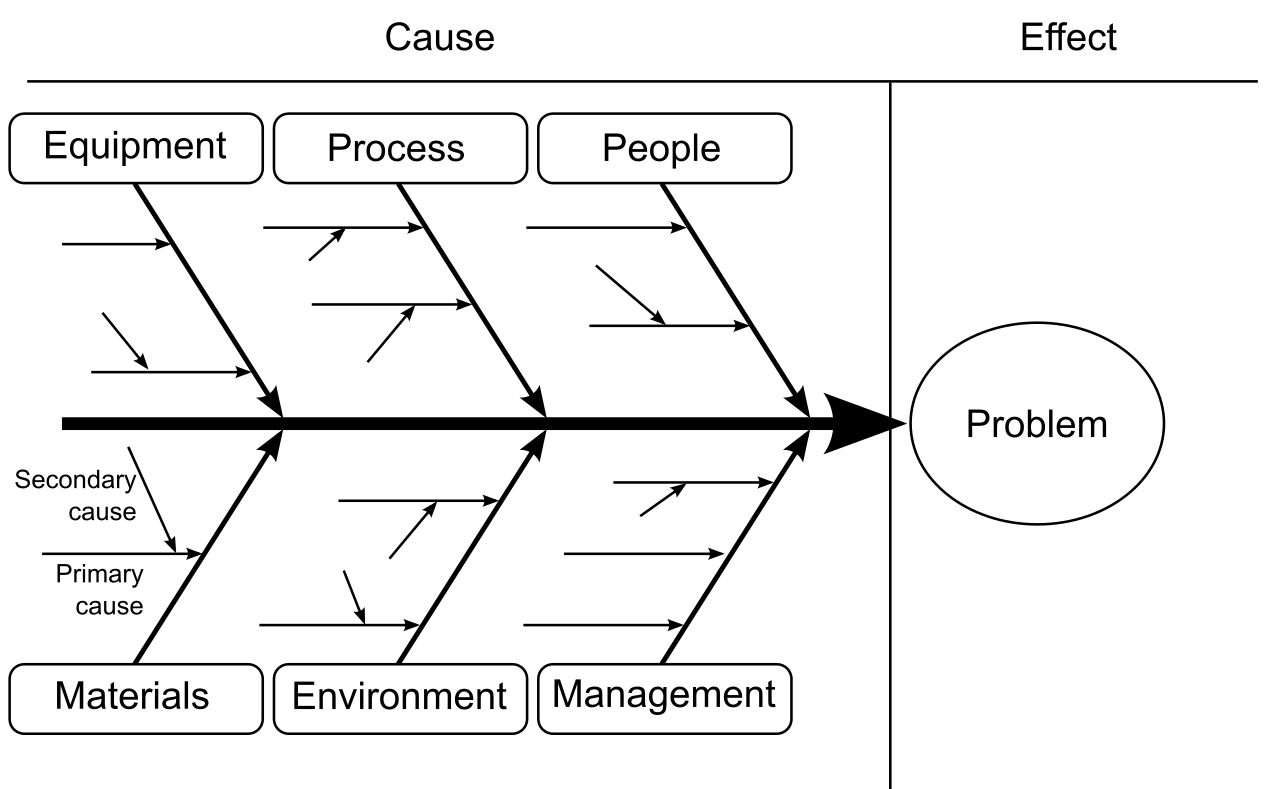
In informational texts, specific details often map out complex cause-and-effect relationships, acting as the root sub-causes that lead to a major outcome. Source: Ishikawa Fishbone Diagram by FabianLange at de.wikipedia, CC BY-SA 3.0. -
The Finish Line: Finally, as a passage winds down, some specific references function to summarize the primary argument of the passage, tying off all the loose threads into a neat conceptual bow.
5. The Human Element: Emotion, Reflection, and Imagery
We are creatures of logic, but we are moved by feeling. Excellent reading comprehension requires recognizing when an author shifts from appealing to the head to appealing to the heart.
- Putting a Face to the Data: Statistics are cold. To fix this, anecdotes function to humanize a complex or abstract issue within a text. A statistic tells you thousands of teachers are burning out; an anecdote tells you the story of Ms. Davis crying in her car before first period. Consequently, an author may use specific details to appeal to the reader's emotions.
- Painting the Picture: Descriptive details serve to create a vivid mental image of the passage's subject, placing the reader directly into the environment being discussed.
- Engaging the Reader's Mind: Instead of just feeding the reader information, a rhetorical question functions as a specific detail designed to provoke reader reflection. It essentially forces the reader to pause and actively participate in the argument.
Keep this mapping in your head as you approach Praxis Reading questions. When you isolate the specific detail in the text, ask yourself which row of this table the author is activating.
| If the text provides a... | The author's primary function is likely to... |
|---|---|
| Statistic or Number | Quantify the magnitude or severity of a problem. |
| Personal Story / Anecdote | Humanize an abstract issue or appeal to emotions. |
| Quote / Scientific Study | Provide empirical validation or lend credibility. |
| Contrasting Fact | Introduce a counterargument or alternative perspective. |
| Rhetorical Question | Provoke reader reflection. |
| Historical Date / Law | Establish context or outline a regulatory framework. |
Approaching reading comprehension this way transforms the Praxis from a daunting test of endurance into a transparent puzzle. As a future teacher, you know that nothing in a lesson plan happens by accident. Bring that same professional mindset to the texts you read. Look for the intention, identify the function of the tools the author is using, and the correct answers will rapidly reveal themselves.