English & Language Usage for the ATI TEAS 7: What's Tested and How to Study It
In short
English & Language Usage is 22% of the [ATI TEAS 7](/exams/nursing/ati-teas-7) — the smallest of the four sections, tested in 5 topic areas over a tight 37-minute block. It checks whether you can write and read like a nursing professional: correct grammar, clean punctuation, and enough word-part knowledge to decode unfamiliar medical vocabulary on sight.
The big ideas
The whole section rewards one habit — knowing the rule rather than trusting your ear. Casual speech breaks conventions all the time and still sounds fine, so "what feels right" is exactly what the test writers target. Five topic areas make up the domain.
Spelling and punctuation
Commonly confused pairs show up first: affect vs effect, their/there/they're, its/it's. Punctuation questions lean on commas (in lists, after introductory clauses), semicolons joining two complete thoughts, and apostrophes for possession vs contraction. Learn the rules for spelling and punctuation as fixed rules, then drill the exceptions.
Sentence structure and capitalization
You need to tell the four sentence types apart on sight:
Simple → one independent clause. Compound → two independent clauses joined by a conjunction or semicolon. Complex → one independent clause plus a dependent clause. Compound-complex → two independent clauses plus at least one dependent clause.
That single distinction — independent clause (a complete thought) vs dependent clause (an incomplete one) — is the key to most sentence-structure and capitalization questions, plus run-ons and fragments.
Parts of speech and grammar for clarity
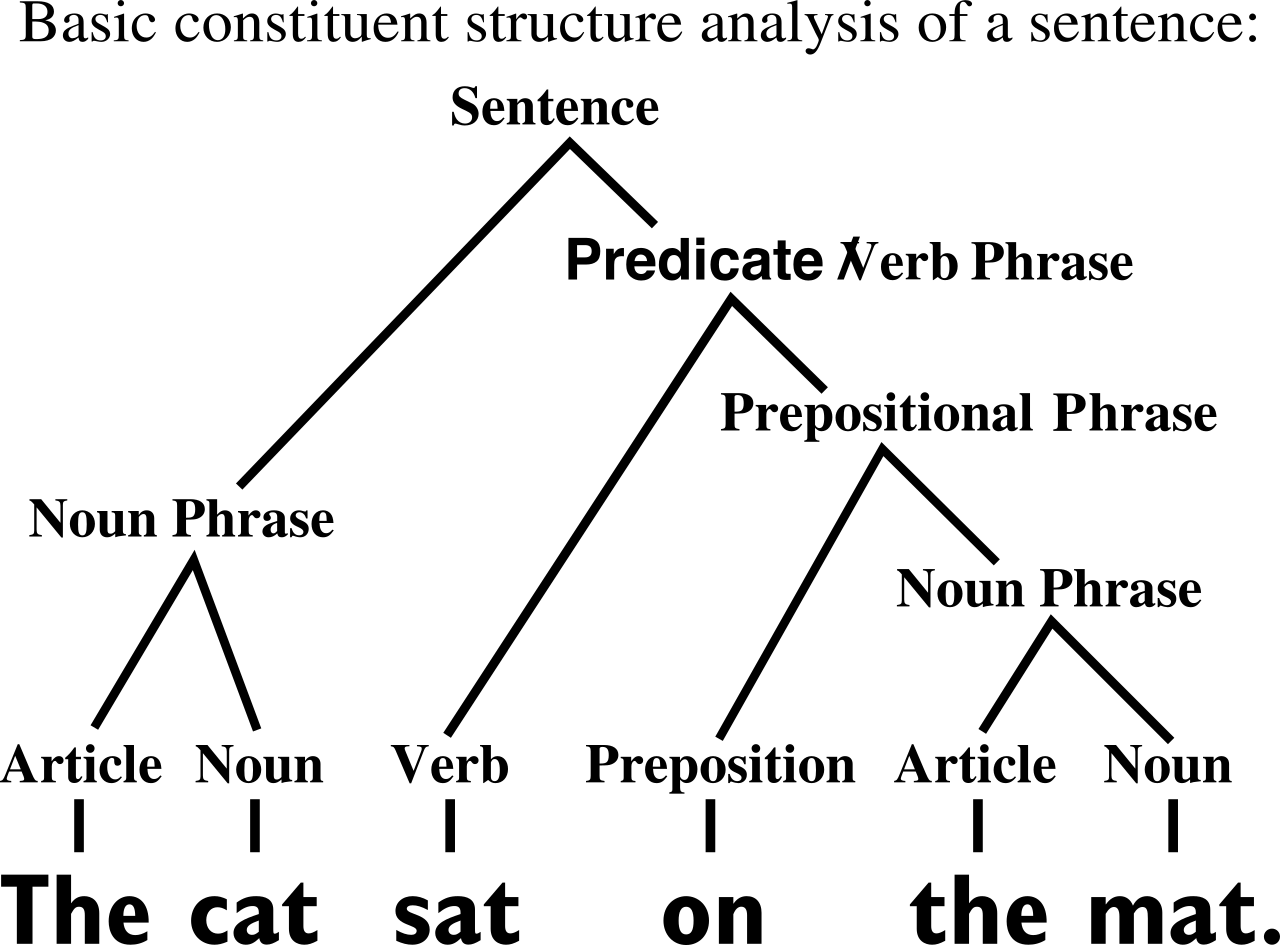
Nouns, verbs, adjectives, adverbs, pronouns, prepositions, conjunctions — you label them and, more usefully, spot when one is misused. The high-value skills are subject-verb agreement (a singular subject takes a singular verb, even when a phrase separates them) and misplaced or dangling modifiers, where a describing phrase accidentally attaches to the wrong word. Practice the parts of speech and grammar for clarity.
Language for audience and paragraph development
Here the test shifts from single sentences to whole paragraphs: formal vs informal register, topic sentences, transitions, and logical order. A question might ask which sentence best fits a formal patient handout, or where a stray sentence belongs. Build the skill with language for audience and paragraph development.
Vocabulary acquisition and word parts
This is the one that pays off in nursing school. Learn common Greek and Latin roots, prefixes, and suffixes — cardio- (heart), -itis (inflammation), hyper- (excessive) — and you can decode a word you've never seen. Cardiomyopathy stops being a wall of letters once you break it into cardio + myo + pathy. Drill vocabulary acquisition and word parts.
How it shows up on the exam
English & Language Usage carries 22% of your scored questions and gets the shortest clock: 37 minutes, versus 55 for Reading, 57 for Math, and 60 for Science. That's roughly a minute per question, so pace matters — these are quick recognition items, not passages to labor over.
Because it's only 5 topic areas and rule-based, it's the most studyable section on the test. Around 10 focused study hours is enough for most candidates to move the needle, and the payoff is high per hour: the rules are finite, and once you know them, they hold. A smart order is:
Nail spelling, punctuation, and sentence types first (the densest question sources) →
then subject-verb agreement and modifiers →
then paragraph-level and word-part questions.
Expect some alternate item formats here too — multiple-select ("select all that apply") and fill-in-the-blank — so read each stem for exactly what it asks. Every topic on Only Ever maps to short 15-minute study units, and the practice questions are free where other prep tools lock them behind a paywall.
Common questions
Can I reliably tell the four sentence types apart? That's the readiness check for this section. If simple, compound, complex, and compound-complex still blur together, start there — it anchors sentence-structure, run-on, and fragment questions.
Do I need to memorize affect vs effect? Yes. Commonly confused words are a reliable question source, and they're pure memorization. Affect is usually the verb (to influence); effect is usually the noun (the result). A short list of these pairs is one of the highest-return things you can drill.
How is English scored? The TEAS reports an overall percentage plus a breakdown by content area, so your English score stands on its own. Many nursing programs — Texas Woman's University, for example — set a minimum for each section, so a weak English score can hold you back even with strong Science. Confirm your program's cutoffs.
How long should I spend on this section? About 10 study hours across your prep, and 37 minutes on test day. It's the lightest section to prepare, which makes it the easiest place to bank points.
Ready to test yourself? Try the free practice questions and see which of the five topics needs another pass.