Accident and Injury Prevention
Not sure you’re ready?
Take the ~3-minute readiness diagnostic and see where you stand.
Welcome to the fascinating, high-stakes world of Accident and Injury Prevention. I want you to think about something fundamentally profound: when a person enters a healthcare facility, they are inherently vulnerable. They are separated from their usual environment, surrounded by strange electrical equipment, subjected to powerful pharmacological agents, and constantly fighting the relentless downward pull of gravity while in a weakened state.
Our job as nurses is not just to administer treatments; it is to engineer a fortress of safety around the client. We do this by applying rigorous skepticism, observing the physical laws of nature, and utilizing foolproof systems. We have to outsmart errors before they even happen.
Let’s dive into the brilliant mechanics of keeping our clients alive, intact, and safe.
If you are going to administer a potent medication or perform a procedure, you must be absolutely, unequivocally certain of your target. You cannot rely on assumptions. Human memory is fallible, and hospital environments are chaotic.
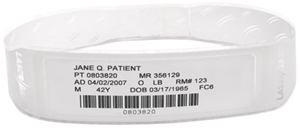
Therefore, The Joint Commission requires the use of at least two client identifiers before providing care, treatment, or services. Why two? Because redundancy is the foundation of safety engineering. If one system fails (e.g., two patients share the same last name), the secondary system catches the anomaly.
Acceptable vs. Unacceptable Identifiers
You must use identifiers that belong inherently and permanently to the client or their specific medical data.
| Acceptable Identifiers | Why It Works |
|---|---|
| First and last name | Specific to the individual, easily verified verbally. |
| Date of birth | A permanent chronological data point unique to the client. |
| Assigned medical record number | A unique, systematically generated alphanumeric code. |
Now, what should we never use? Geography.
⚠️ Warning: A client's room number or bed assignment is never an acceptable client identifier.
Why? Because patients move! They get transferred, beds get swapped, and rooms change. If you rely on "the patient in Bed 3," and housekeeping just swapped the patient in Bed 3 with someone from Bed 4 while you were on a lunch break, you are about to make a catastrophic medication error.
The Verification Ritual
Before you ever push a plunger or hand over a pill, you must engage in a ritual of verification: nurses must check the client identification band against the medical record before administering medications.
Now, modern hospitals have a wonderful technological assist: barcode scanning systems. By scanning the patient’s wristband and the medication, these systems provide an additional safety measure during medication administration. But—and pay very close attention here—technology is a safety net, not a replacement for your brain. Barcode scanning systems do not eliminate the requirement to verbally verify client identifiers. Scanners glitch. Bands get placed on the wrong wrist by exhausted triage staff. Always ask, "Can you tell me your name and date of birth?" Technology augments your nursing judgment; it never replaces it.
The body’s immune system is a marvel, but sometimes it gets terribly confused, launching a full-scale thermonuclear war against a harmless substance. We call this an allergy.
Nurses must verify client allergies upon admission to a healthcare facility. This is the first line of defense. Once verified, nurses must document all client allergies in the permanent medical record so the entire interdisciplinary team can see them.
To ensure this invisible physiological threat is immediately visible to anyone walking into the room, healthcare facilities typically use red wristbands to alert staff to a client allergy. Red is the universal color of "Stop and Think."
Before you introduce any foreign substance into the client's body, nurses must verify client allergies in the medication administration record before giving any medication.
The Intravenous Crisis
Suppose you are infusing an antibiotic intravenously. Suddenly, your client develops a rash, starts wheezing, and their blood pressure drops. What is the fundamental, immediate rule of physics and medicine here? Stop the exposure! The immediate nursing action for a suspected allergic reaction during an intravenous infusion is to stop the infusion. Do not call the doctor first. Do not go look for epinephrine first. Turn off the tap! You must halt the delivery of the antigen immediately.
The Bizarre Biology of Latex and Fruit
Let’s talk about a very specific and critical allergy: Latex. Repeated exposure to a protein makes the immune system more likely to sensitize to it. Because of the frequent medical procedures, surgeries, and straight catheterizations they undergo from birth, clients with spina bifida have a high risk of developing a latex allergy.
But here is where biology gets truly fascinating. The proteins found in natural rubber latex have molecular structures that are astonishingly similar to the proteins found in certain fruits. We call this cross-reactivity. If your patient’s immune system is trained to attack latex, it will look at a piece of fruit, recognize the molecular shape, and attack it too!
Therefore, remember this peculiar but vital triad: latex allergies share cross-reactivity with bananas, avocados, and kiwis. If your patient tells you, "Every time I eat an avocado, my lips tingle," you must immediately treat them as a latex-allergy risk!
A hospital room is a dynamic environment, and as nurses, we have to act as environmental engineers. We are constantly mitigating the risks of gravity (falls) and electricity (shocks and fires).
The Lifeline: The Call Light
A patient who feels isolated will try to do things themselves, often resulting in a fall. Assessing the client's understanding of the call light system promotes a safe care environment. It is not enough to just hand it to them; you must know that they know how to use it.
Always, without exception, nurses must place the call light within the client's continuous reach. Furthermore, nurses must educate clients to request assistance before getting out of bed.
Outsmarting Gravity: Bed and Floor Physics
When a patient inevitably does try to stand up, we want to minimize the potential kinetic energy of a fall. The higher the bed, the harder the impact. Therefore, the client bed must be kept in the lowest possible position to minimize fall injury risk.
And what about friction? If a client leans on a bed to stand, and that bed rolls, they will hit the floor. Bed wheels must remain locked at all times when a client bed is stationary. The only time you override this rule is when physics demands it: nurses must unlock bed wheels only during active transport of the client bed.
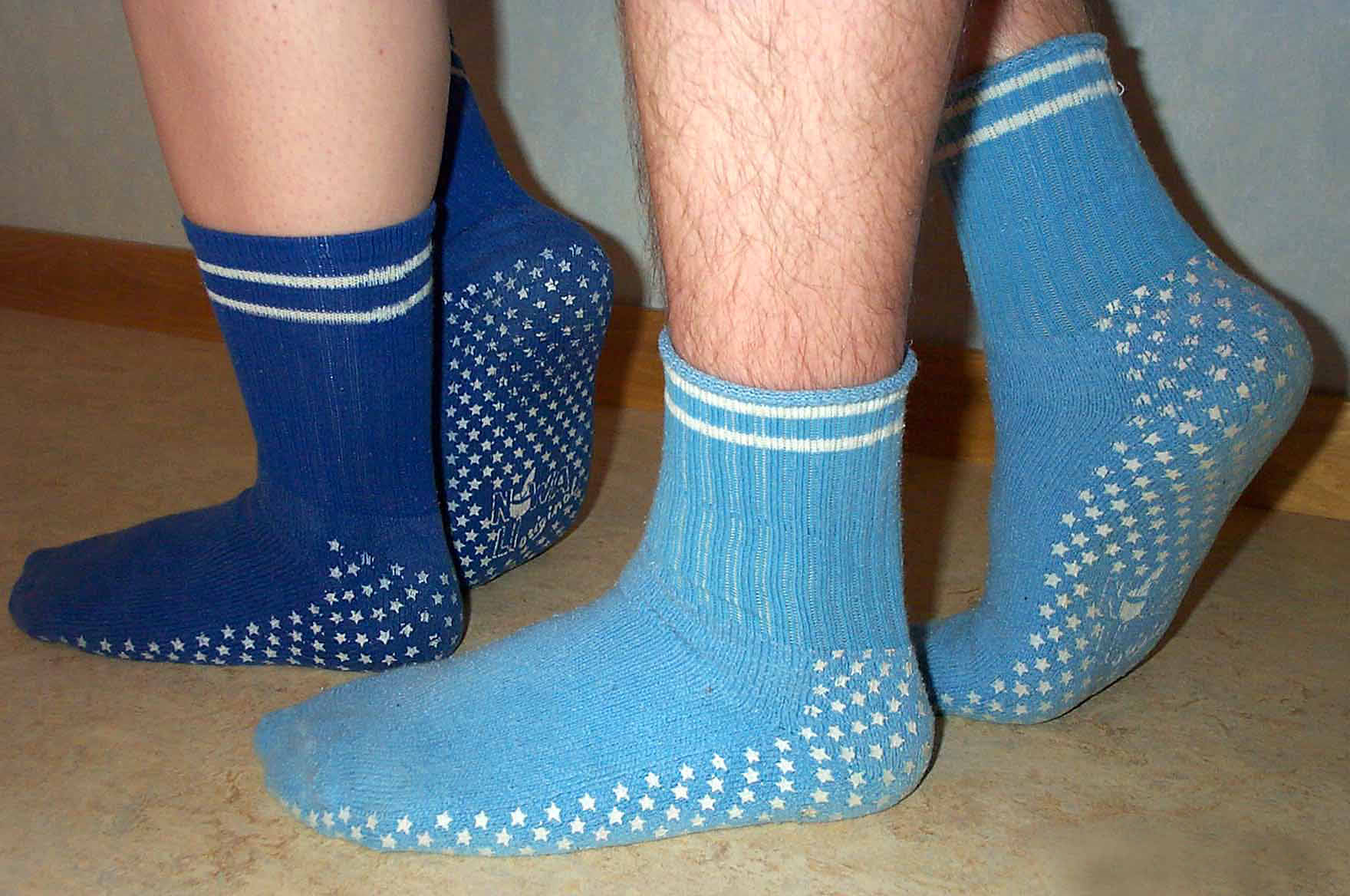
To further increase friction between the client and the floor, clients assessed as a high fall risk must wear non-skid footwear during ambulation. Slippery hospital socks on smooth linoleum floors are a recipe for disaster.
We also manipulate the visual and physical space. Adequate lighting in the client's room reduces the risk of tripping and falling, because humans rely on visual contrast to navigate obstacles. Similarly, nurses must clear the client's floor of clutter to eliminate tripping hazards.
If a client has a cognitive impairment and forgets to ask for help, we use a technological backup: Bed alarms alert healthcare staff when a client attempts to exit the bed unassisted.
Managing the Electrical Threat
Hospitals run on electricity. But electricity likes to escape its intended pathways. Nurses must immediately remove frayed electrical cords from the client care environment. A frayed cord is an exposed wire, and an exposed wire is a spark waiting to ignite oxygen or a shock waiting to stop a heart. If a machine starts sparking, smoking, or failing to operate correctly, do not leave it in the room for the next person to find. Faulty medical equipment must be tagged and removed from the client care area immediately.
Moving a human body from a bed to a wheelchair requires an understanding of structural integrity—both the client's and yours.
Before you ever try to lift someone, you have to gather data. Nurses must determine a client's weight-bearing capacity before initiating any physical transfer. Can they support their own weight? Can they bear weight on at least one leg? If you don't know the answer, you are guessing, and guessing causes catastrophic injuries.
Transfer Tools
We use simple machines and tools to distribute force safely.
-
Gait Belts: Gait belts provide a secure grip point for the nurse during client ambulation. Instead of awkwardly grabbing a client's arm (which can cause a shoulder dislocation or skin tear), you hold the belt at their center of gravity. Crucially, nurses must apply a gait belt over the client's clothing to prevent skin injury. Friction against bare skin under heavy loads causes sheer forces that tear the epidermis.
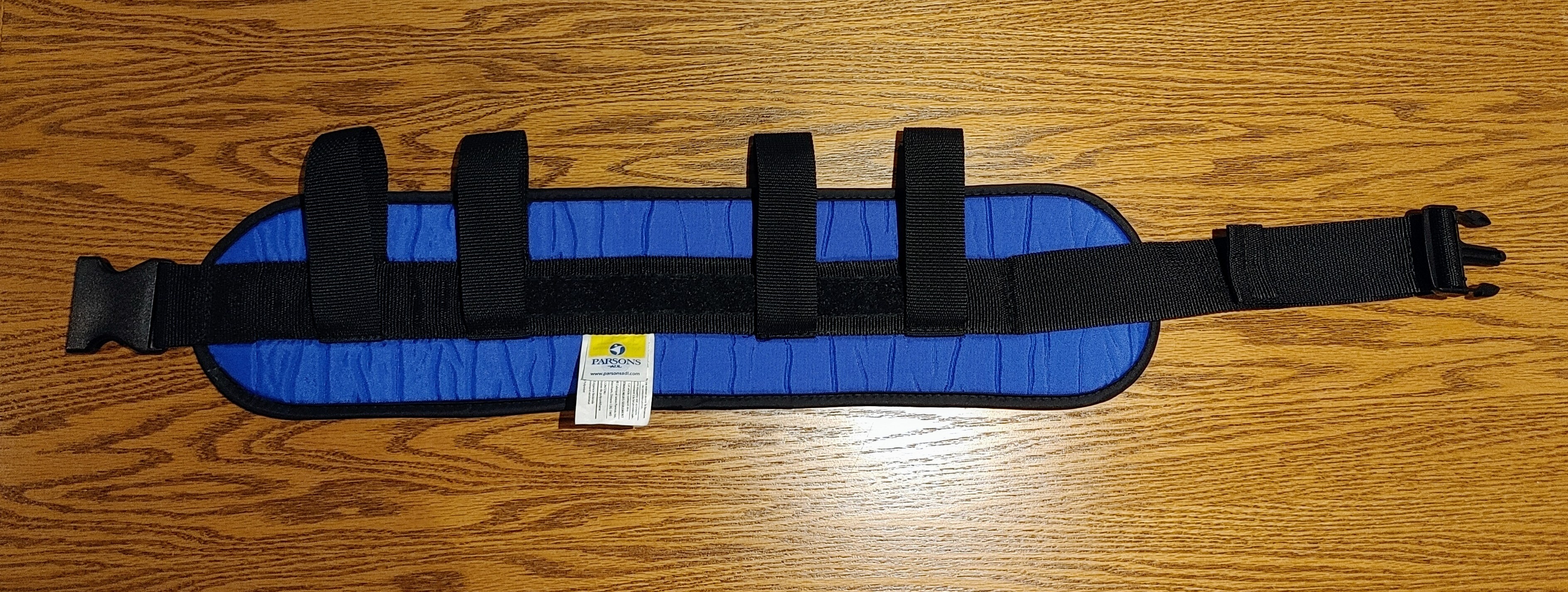
A gait belt provides a secure mechanical grip at the client's center of gravity and must be applied over clothing to prevent sheer forces from tearing the skin. Source: Ceinture de marche by Jeangagnon, CC BY-SA 4.0. -
Slide Boards: If a patient has upper body strength but cannot bear weight on their legs, we use geometry to our advantage. Slide boards facilitate seated transfers between a bed and a wheelchair, effectively creating a stable bridge to slide across rather than lifting the client vertically.
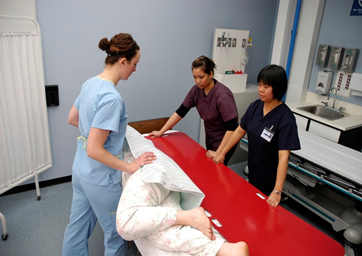
A slide board acts as a stable geometric bridge, allowing patients with upper body strength to perform a seated transfer between surfaces without bearing weight on their legs. Source: Transfer board and patient by Glynda Rees Doyle and Jodie Anita McCutcheon i, CC BY 4.0. -
Mechanical Lifts: What if the patient has zero weight-bearing capacity? We do not use human backs; we use hydraulics. Mechanical lifts are required to transfer clients who are completely immobile. Because operating these machines requires balancing a suspended load, navigating machinery, and guiding the client, mechanical lifts require the assistance of at least two staff members for safe operation.
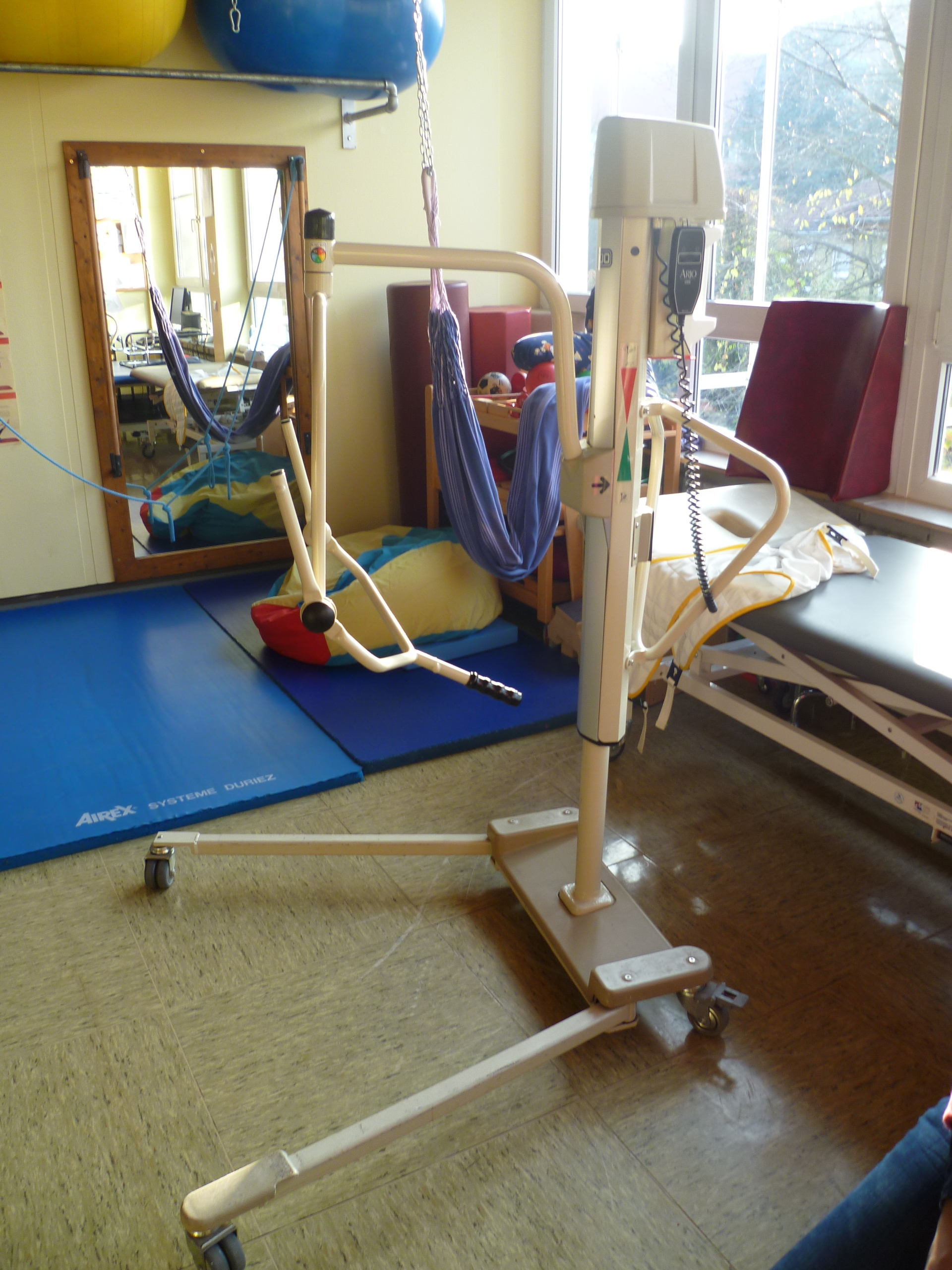
Mechanical patient lifts use hydraulics to safely transfer completely immobile clients, requiring at least two staff members to manage the suspended load and guide the machinery. Source: Patientenlifter by Gripweed, CC BY-SA 3.0.
Wheelchair Physics
Let's talk about Newton's Third Law of Motion: For every action, there is an equal and opposite reaction. When a client pushes their weight backward into a wheelchair, the wheelchair will naturally want to shoot backward out from under them. To prevent this, nurses must engage wheelchair brakes prior to transferring a client into the wheelchair. The reverse is also true! When a client pushes forward to stand up, the chair will roll backward. Therefore, nurses must engage wheelchair brakes prior to transferring a client out of the wheelchair.
Fire requires three things: heat (a spark), fuel (linens, paper), and oxygen. Hospitals are packed with all three. When a fire breaks out, panic is your enemy. Protocol is your savior.
The RACE Protocol
When you encounter a fire, your brain will flood with adrenaline. You must rely on a mnemonic to guide your actions systematically. The RACE acronym guides staff actions during a facility fire emergency.
R - Rescue: The letter R in the RACE fire acronym stands for Rescue clients in immediate danger. Life safety always comes first. Get the people out of the immediate vicinity of the flames.
A - Alarm: The letter A in the RACE fire acronym stands for Alarm or activate the fire alarm system. You cannot fight a fire alone. Pull the alarm so the cavalry (and the fire department) knows to come.
C - Confine: The letter C in the RACE fire acronym stands for Confine the fire by closing doors. Fire needs oxygen. By shutting the heavy fire doors in a hospital, you starve the fire of oxygen and block the spread of toxic smoke.
E - Extinguish or Evacuate: The letter E in the RACE fire acronym stands for Extinguish the fire or Evacuate the area. If the fire is small (like a trash can), fight it. If it is large, get out!
The PASS Protocol for Fire Extinguishers
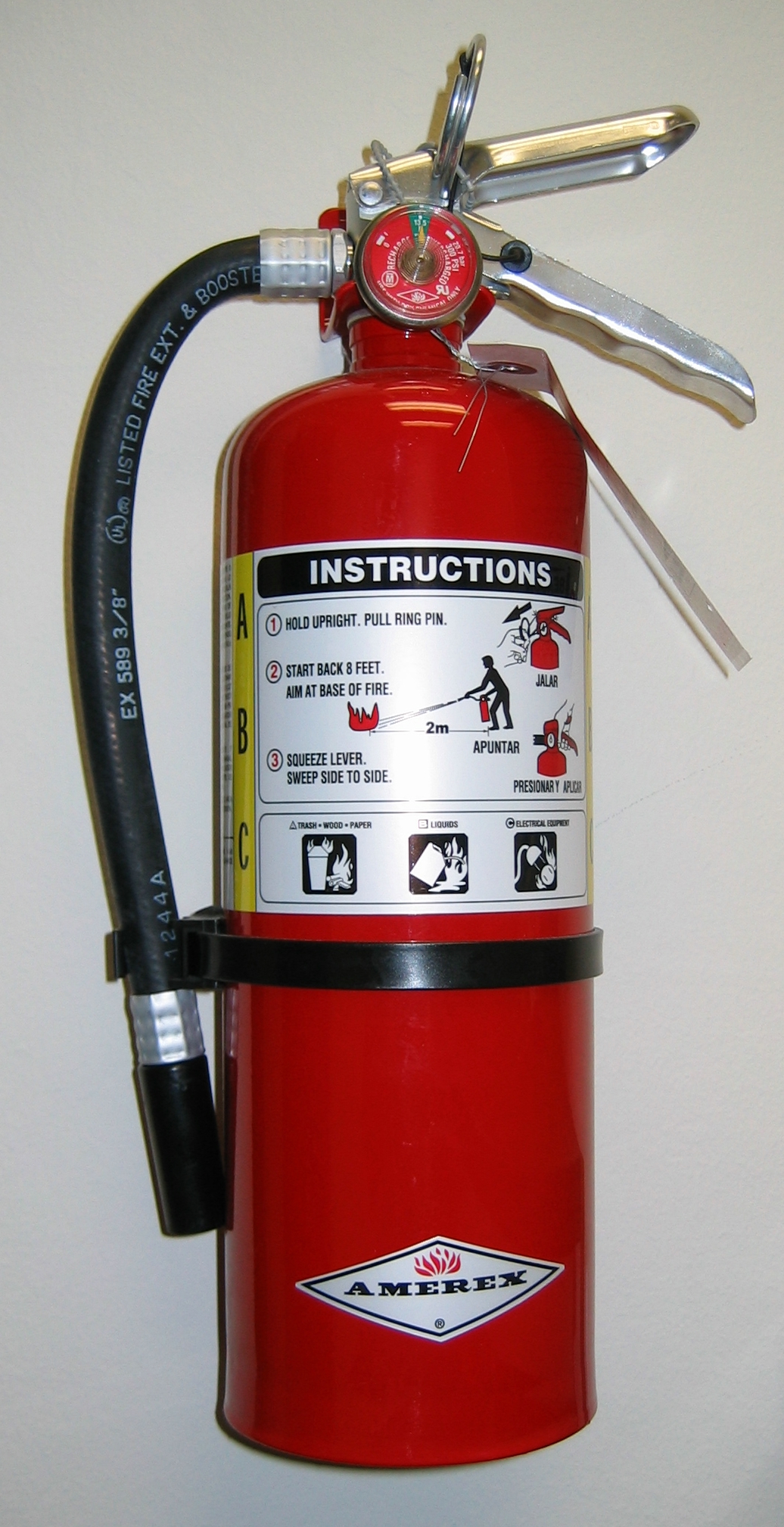
If you must extinguish the fire, staring blankly at the red cylinder won't help. You use The PASS acronym, which provides instructions for the correct use of a fire extinguisher.
P - Pull: The letter P in the PASS acronym stands for Pull the pin on the fire extinguisher. This breaks the tamper seal.
A - Aim: The letter A in the PASS acronym stands for Aim the extinguisher nozzle at the base of the fire. You must attack the fuel source, not the flames dancing in the air.
S - Squeeze: The first letter S in the PASS acronym stands for Squeeze the handle of the fire extinguisher. This releases the pressurized extinguishing agent.
S - Sweep: The second letter S in the PASS acronym stands for Sweep the extinguisher nozzle from side to side. This blankets the entire fuel source, smothering the chemical reaction.
The Dangers of an Oxygen-Enriched Environment
We frequently administer supplemental oxygen to clients. Oxygen itself is not flammable, but it is an accelerant. It causes things that wouldn't normally burn to ignite with explosive ferocity.
First, consider the storage. Oxygen is kept in highly pressurized metal tanks. If a tank falls over and the valve snaps off, it literally becomes a high-speed missile. Therefore, oxygen cylinders must be stored in upright carts or stands to prevent tipping.
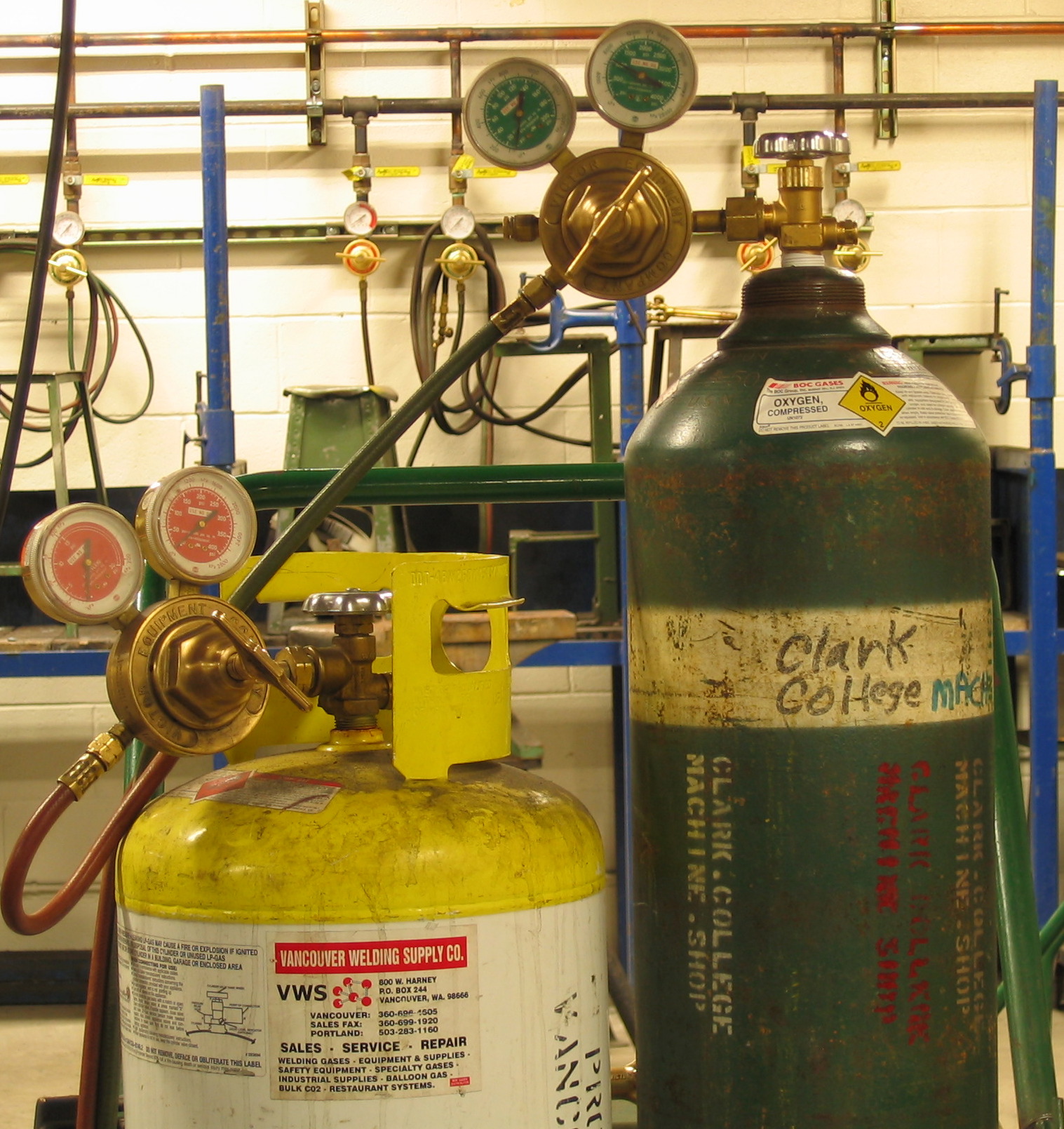
Next, consider ignition sources. Because oxygen accelerates combustion so violently, smoking is strictly prohibited in any area where oxygen is in use.
But here is the stealthiest ignition source of all: static electricity. When certain fabrics rub together, they strip electrons from one another, building up a static charge. When that charge jumps to a grounded surface, it creates a microscopic spark. In normal air, this is just an annoying shock. In an oxygen-enriched environment, it is a detonator.
Synthetic fabrics pose a risk in oxygen-enriched environments due to static electricity sparks. Materials like nylon, polyester, and wool are notorious for generating static. To eliminate this risk, we rely on a material that does not easily generate static charge. Cotton blankets are recommended for clients receiving oxygen therapy to minimize static electricity.
In Summary
Safety is not a passive state; it is an active pursuit. Every time you verify two identifiers, trace a red allergy band, lock a bed wheel, clip a gait belt, or swap a synthetic blanket for a cotton one, you are actively manipulating the physics and protocols of the healthcare environment to protect a vulnerable human life. Master these concepts, and you will not only pass the NCLEX—you will be an exceptional, life-saving nurse.